


A check valve lets the medium flow in one direction only and closes automatically when the flow reverses. FERGO supplies check valves in seven designs, from compact disc check valves to foot valves. Bodies in stainless steel, ductile iron, grey cast iron, steel, brass or bronze cover water, steam, oil and chemicals.
500 check valves · 7 designs · DN8–DN500 · PN6–PN160 and ANSI Class 125–900 · NBR, EPDM, FKM, PTFE or metal seals · delivered across the EU in 2–7 working days


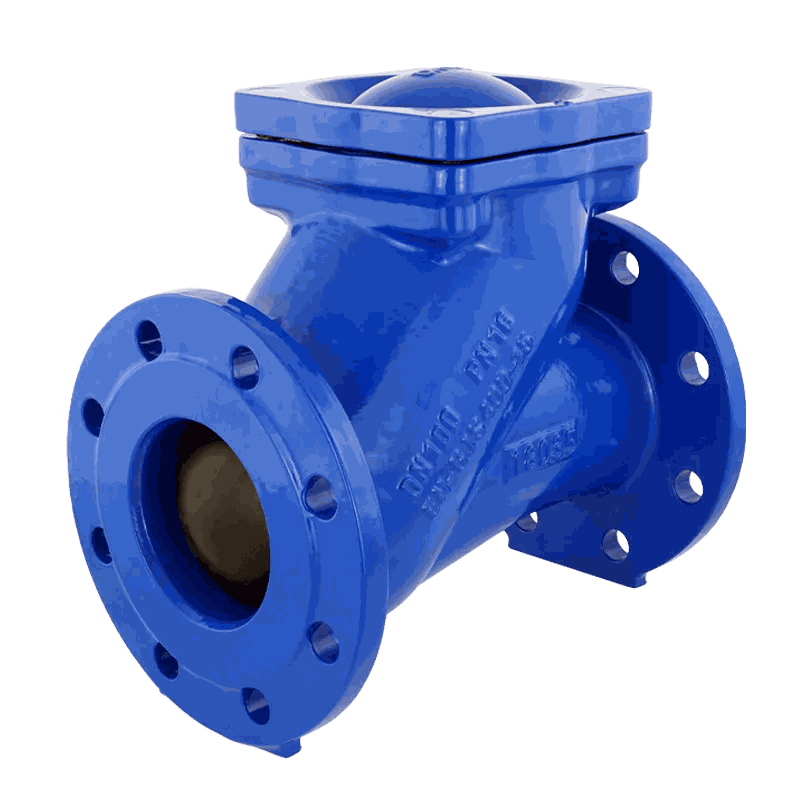


Check valve range in stock – 500 variants with fast EU delivery
A check valve protects pumps, vessels and pipelines against backflow. FERGO stocks 500 variants in seven designs from DN8 to DN500. Most items ship from stock. As a result, delivery across the EU usually takes 2–7 working days.
Datasheets, and 3D models for selected items, are available directly on the product page. You can therefore check face-to-face length, materials and pressure rating before you order. For replacements in existing plants, filter the configurator by size, connection and body.
How a check valve works
A check valve needs no external energy. The flow pressure lifts the closing element – a disc, cone or ball – off its seat. When the pressure drops or the flow reverses, a spring or gravity pushes it back. As a result, the valve closes automatically and holds the medium back.
When installing, note the flow direction, which is usually marked on the body. In addition, plan a calm inflow section after pumps or pipe bends. This prevents the disc from chattering and wearing early.
The table below shows which design suits your medium:
| Medium | Recommended design | Category |
|---|---|---|
| Water, cooling and heating water | Spring-loaded disc or threaded design | Disc, threaded |
| Wastewater and media with solids | Ball design without spring | Ball check valves |
| Steam and condensate | GESTRA RK or cast steel lift design | GESTRA, lift |
| Pump discharge lines | Axial design RD100 | Axial |
| Pump suction lines | Foot valve RV105 with strainer | Foot valves |
| Acids, alkalis and solvents | PFA-lined version | PFA-lined |
| Oils and compressed air | Version with NBR seal | "Seal" filter in the configurator |
In addition, check chemical compatibility in advance with our resistance tool.
Choosing a check valve by design
The right design depends on connection, nominal size, pressure rating and medium. Disc designs save space between two flanges. Threaded designs and foot valves, in contrast, suit threaded lines. Lift and axial designs fit larger process and pump lines.
| Design | Connection | Size and pressure | Series | Variants |
|---|---|---|---|---|
| Disc check valve | Wafer, EN 558-1 series 49 (high pressure: series 52) | DN15–DN200, PN6–PN160, ANSI 150–900 | RV100, RV108, RV110 (with 4 earthing lugs) | 213 |
| Threaded check valve | Female thread ISO 228-1 or NPT | DN8–DN100 | RV101 (stainless steel), RV102 (brass) | 38 |
| Lift check valve | Flange EN 1092, spring-loaded lift | DN15–DN250, PN10–PN40 | ZV116 (grey cast iron), RV430 (cast steel), RV450 (stainless steel) | 40 |
| GESTRA check valve | Wafer, flange or thread | DN15–DN300, PN6–PN40, ANSI 125–300 | RK 86, RK 76, RK 44 | 127 |
| Ball check valve | Flange EN 1092-2 or BSP socket | DN15–DN500, PN10/PN16 | RB105 (GGG40), RB106 (stainless steel) | 61 |
| Axial check valve | Flange EN 1092 | DN50–DN300, PN10/PN16 | RD100 | 12 |
| Foot valve | Female thread ISO 228-1, with strainer | DN15–DN100, 8–10 bar | RV105 (brass) | 9 |
The manufacturer provides technical documents for the GESTRA RK series. For larger lines with a swing movement, FERGO also stocks non-return valves in wafer, dual plate and threaded versions.
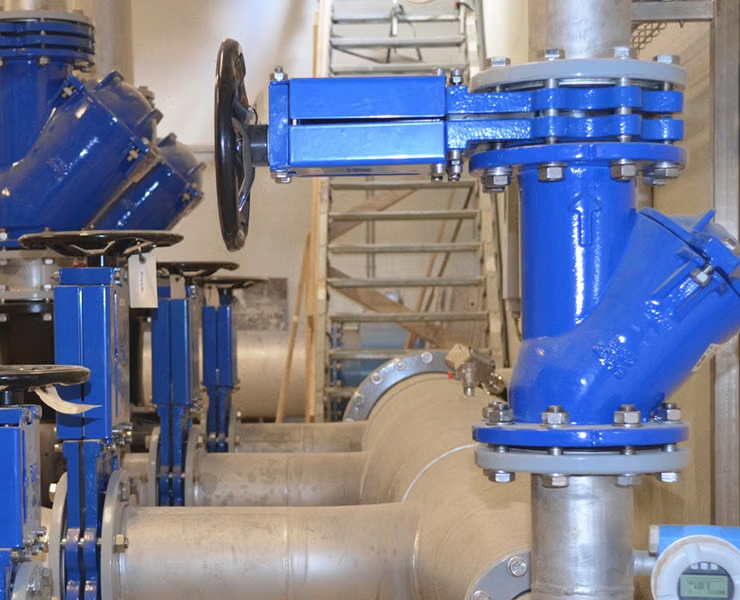
FERGO: the right check valve for every pipeline
Four features decide whether a check valve closes reliably and stays tight: body, seal, closing principle and connection.
The body
Stainless steel such as 1.4408 or 1.4301 resists corrosion and many chemicals. Brass, on the other hand, suits water, compressed air and heating. Ductile iron (GGG40) and grey cast iron cover water and wastewater lines economically.
For high temperatures, cast steel is the better choice: the RV430 lift design works up to +400 °C. For aggressive media, FERGO also stocks PFA-lined versions.
The seal
The seal decides which media and temperatures the valve can handle. You can see typical values from the range in this table:
| Seal | Typical media | Temperature (example) |
|---|---|---|
| NBR | Water, oils, greases, compressed air | −20 °C to +80 °C (RB105, RB106) |
| EPDM | Water, heating water, wastewater – not for oils | −10 °C to +80 °C (RD100) |
| FKM (Viton) | Fuels, hydrocarbons | −15 °C to +200 °C (RB106) |
| PTFE | Acids, alkalis, solvents | −20 °C to +150 °C (RB106) |
| Metal | Steam, hot water, high temperatures | Up to +400 °C (RV430) |
The limits apply per series. The datasheet on the product page is therefore always decisive.
Spring-loaded or gravity-closing?
Spring-loaded designs close quickly and work in almost any installation position. Valves without a spring, however, open at very low pressure. The comparison helps you choose:
| Criterion | With spring | Without spring |
|---|---|---|
| Installation position | Any, e.g. GESTRA RK 86 | Limited, depending on design |
| Closing behaviour | Closes fast, before backflow starts | Closes by gravity, slightly later |
| Opening pressure | Slightly higher due to the spring force | Low |
| Typical designs | Disc, threaded, lift, axial | Ball design, disc without spring |
Connection and pressure rating
FERGO supplies these valves for pipelines to DIN, EN and ANSI:
| Feature | Options at FERGO |
|---|---|
| Nominal size | DN8 to DN500 (¼" to 20") |
| Flange (EN 1092) | PN6, PN10, PN16, PN25, PN40, PN63, PN100, PN160 |
| Flange (ANSI/ASME) | Class 125, 150, 300, 600, 900 |
| Thread | Female thread to ISO 228-1, BSP socket, NPT |
| Face-to-face length | EN 558-1, e.g. series 49 (disc), 52 (high-pressure disc), 48 (ball) |
| Option | Four earthing lugs (RV110) |
Matching flange gaskets also complete the installation.
Standards and documentation
EN 16767 sets out the requirements for metallic check valves. Flanges follow EN 1092, face-to-face lengths EN 558-1 and threads ISO 228-1. In the EU, the Pressure Equipment Directive 2014/68/EU also applies to pressure equipment.
The RV110 disc design carries four earthing lugs. With these, you can discharge electrostatic charges. You can find all available documents under Certificates. If you need a design outside the standard range, FERGO develops a custom solution.
Disc, swing or ball check valve – which one fits?
All three prevent backflow, but they use different closing elements. The comparison shows the main differences:
| Criterion | Disc / lift design | Swing design | Ball design |
|---|---|---|---|
| Closing element | Disc or cone, usually spring-loaded | Flap on a hinge | Ball without spring |
| Movement | Lift | Swing | Ball moves out of the flow path |
| Strength | Compact, closes fast | Low pressure loss in large sizes | Insensitive to solids |
| Typical use | Water, steam, process lines | Water and wastewater in large lines | Wastewater, slurries, pumping stations |
At a pump connection, the check valve rarely works alone. A strainer protects the pump on the suction side, while a rubber expansion joint dampens vibration. For shut-off, a butterfly valve or a ball valve completes the set-up. In steam and condensate lines, GESTRA steam traps also belong in the system.
Not sure which design you need? Then our team will gladly advise you via the contact form. Alternatively, start with our disc check valves, the largest group in the range. You can also read technical articles on the FERGO blog and find data for all series on fergo.eu.

FAQ

Certificates

Special solutions
